Nelling, Inc.
Cloth Dolls
Click on photos to enlarge.
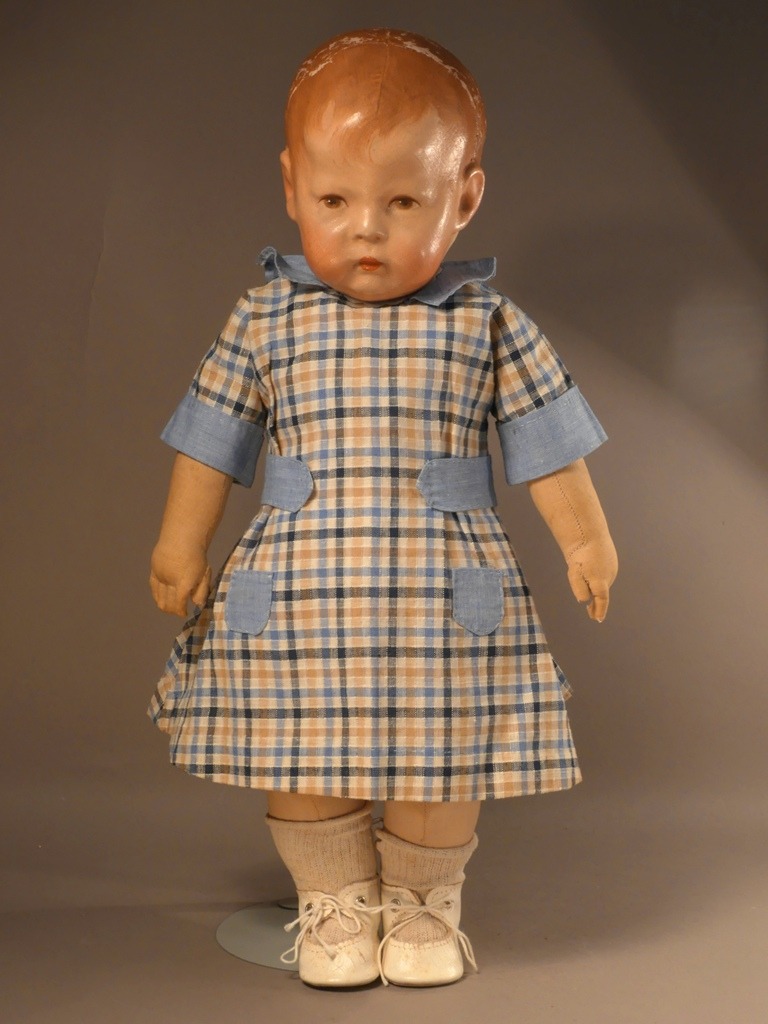
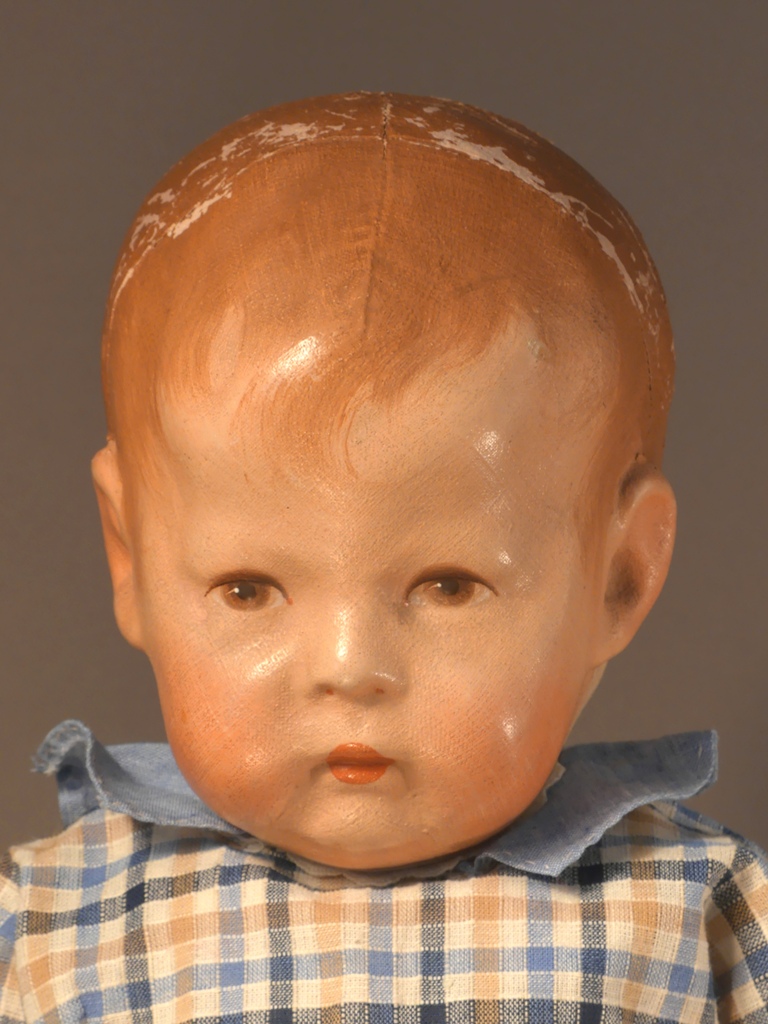
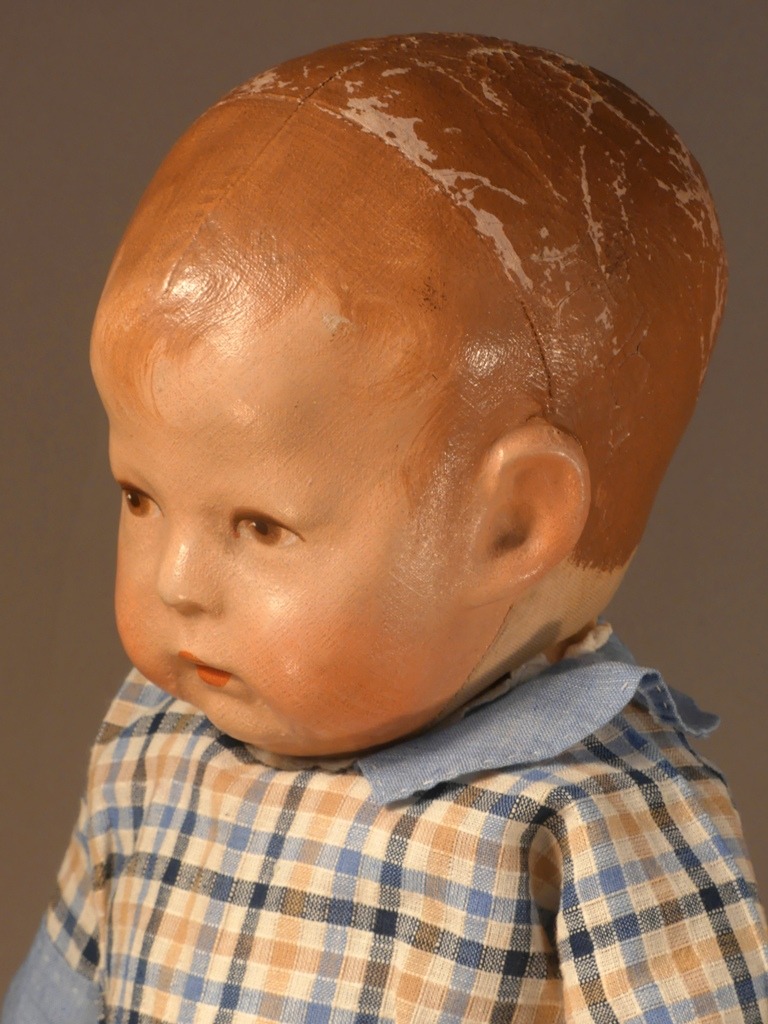
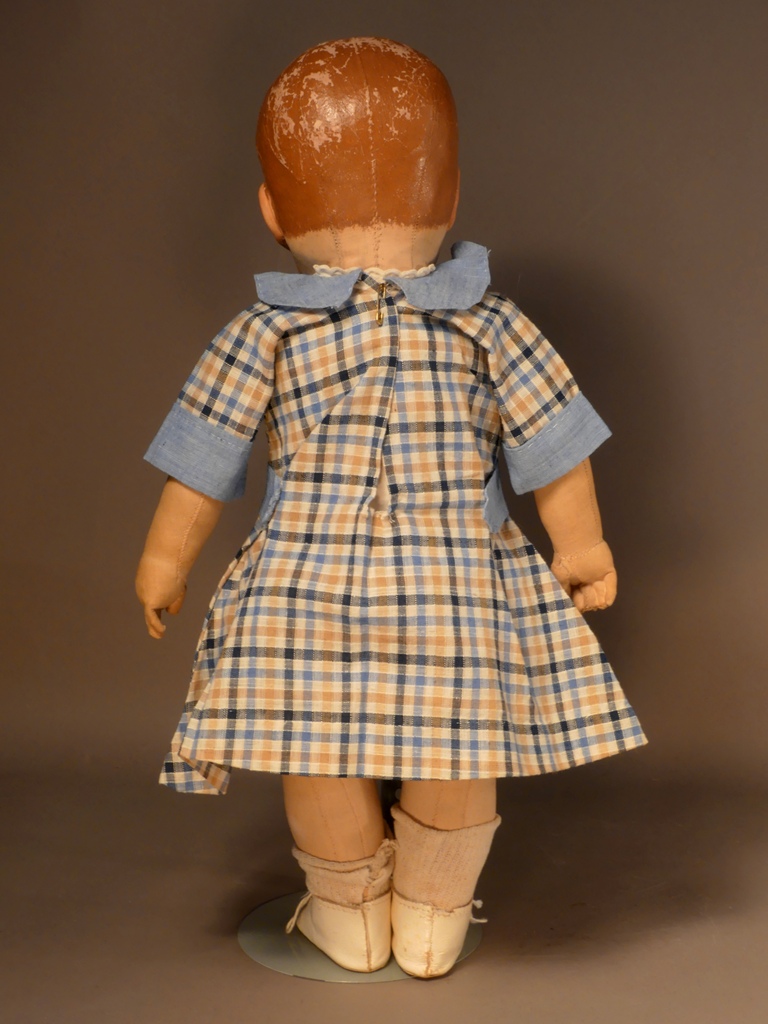
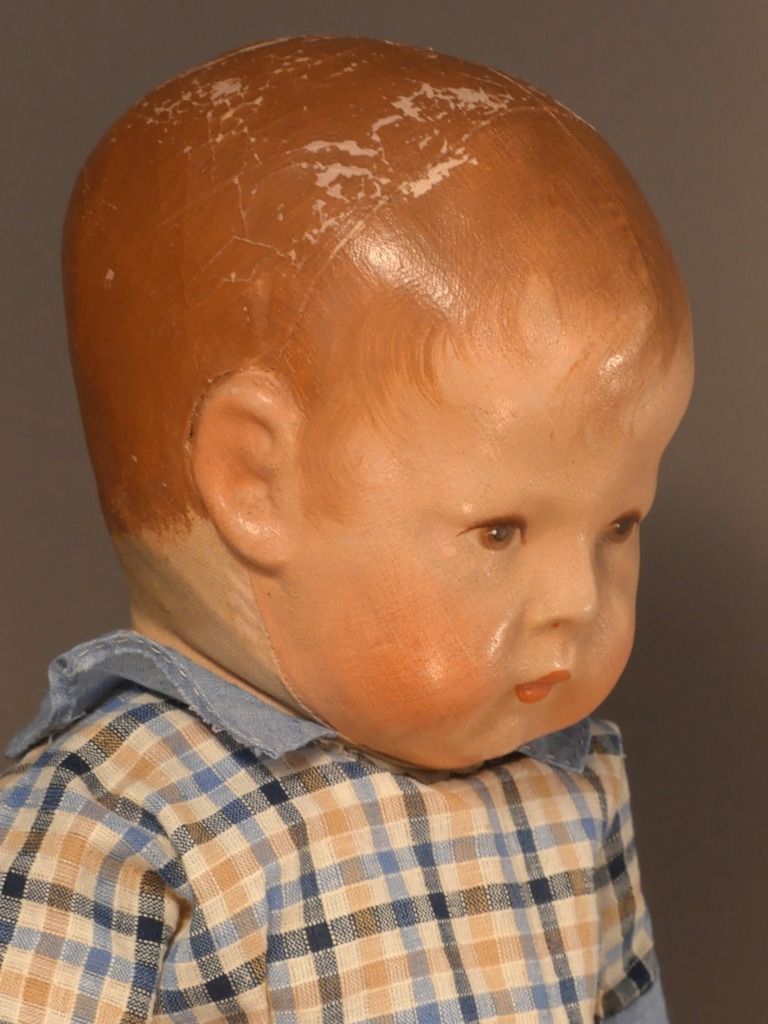
This early, collaborative piece showcases Kathe Kruse’s creation of a cloth doll based on the Kammer and Reinhardt 101 bisque character “Peter.” Produced around 1910, it represents a rare and seldom-seen example. The doll’s facial expression captures the essence of Peter, yet retains the distinct texture and earthy charm typical of Kathe Kruse’s work. The facial features are hand-painted, and there is some wear visible on the surface of the hair and face.
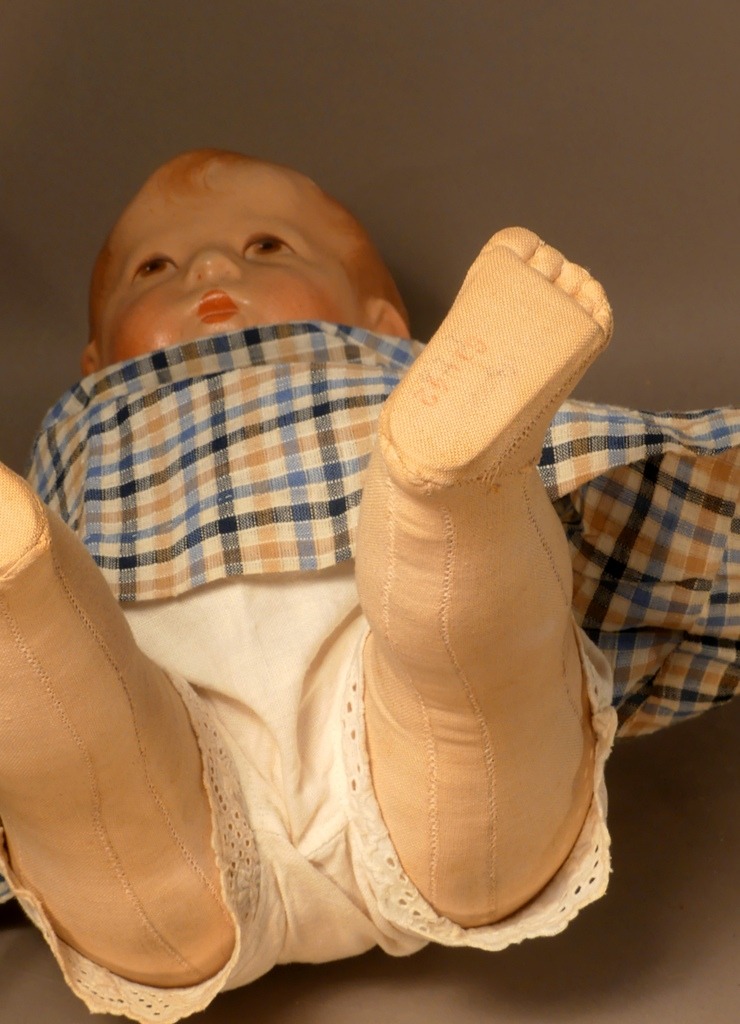
The stuffed cloth body is constructed in the classic Kathe Kruse style, with this particular model featuring the rare “frog hands” (one thumb is missing). The knee joints are especially noteworthy, as the upper and lower legs are connected with cloth ball joints. There has been some restitching around the left ankle joint.
The doll is dressed in a charming three-piece white cotton outfit, which includes creatively constructed underpants beneath a multi-button shirt and shorts. The sturdy, lace-up leather shoes are distinctive in their design and stitching, while the vintage cotton cap, added later, completes the ensemble.
The stuffed cloth body is constructed in the classic Kathe Kruse style, with this particular model featuring the rare “frog hands” (one thumb is missing). The knee joints are especially noteworthy, as the upper and lower legs are connected with cloth ball joints. There has been some restitching around the left ankle joint.
The doll is dressed in a charming three-piece white cotton outfit, which includes creatively constructed underpants beneath a multi-button shirt and shorts. The sturdy, lace-up leather shoes are distinctive in their design and stitching, while the vintage cotton cap, added later, completes the ensemble.
s s s
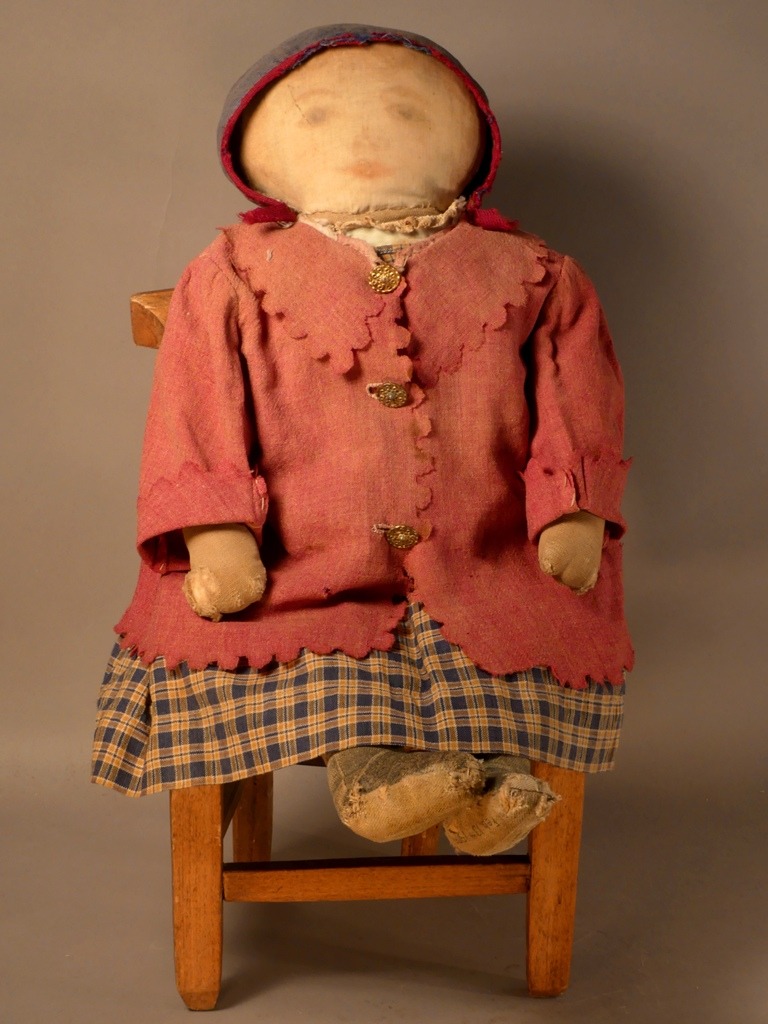
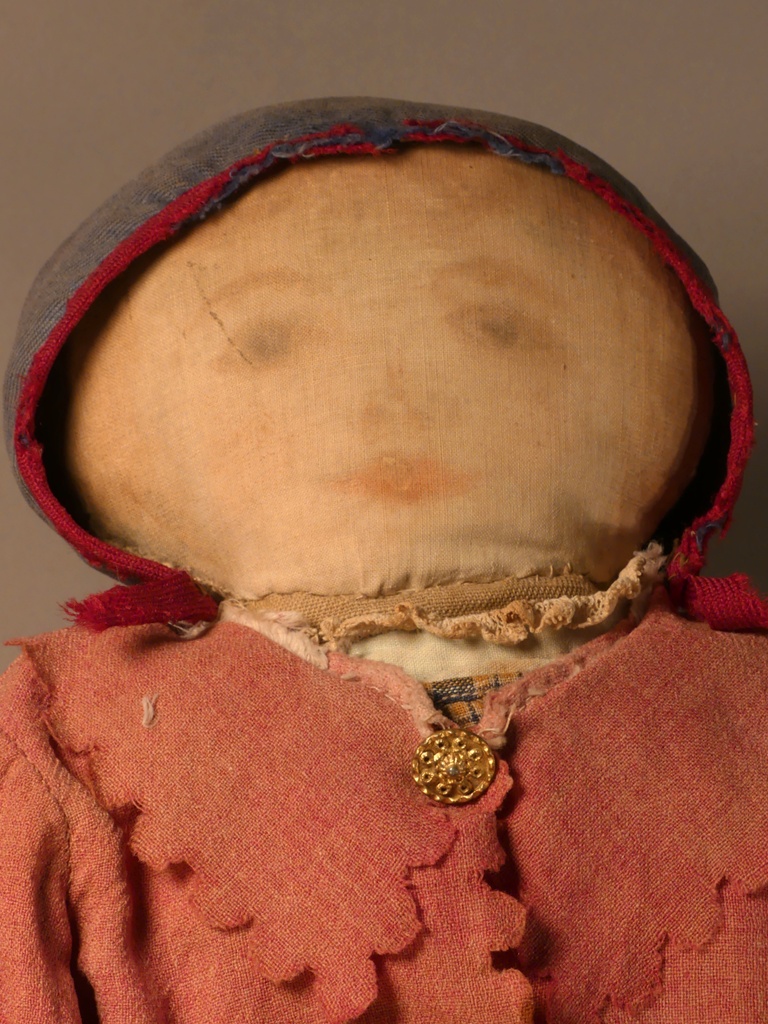
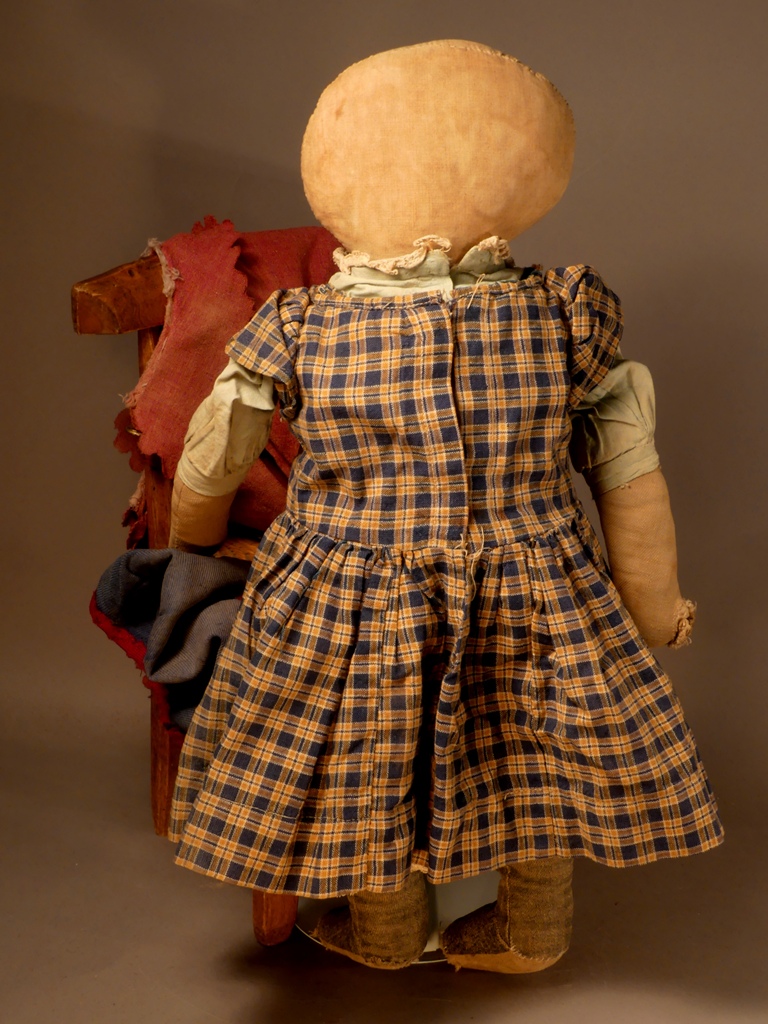
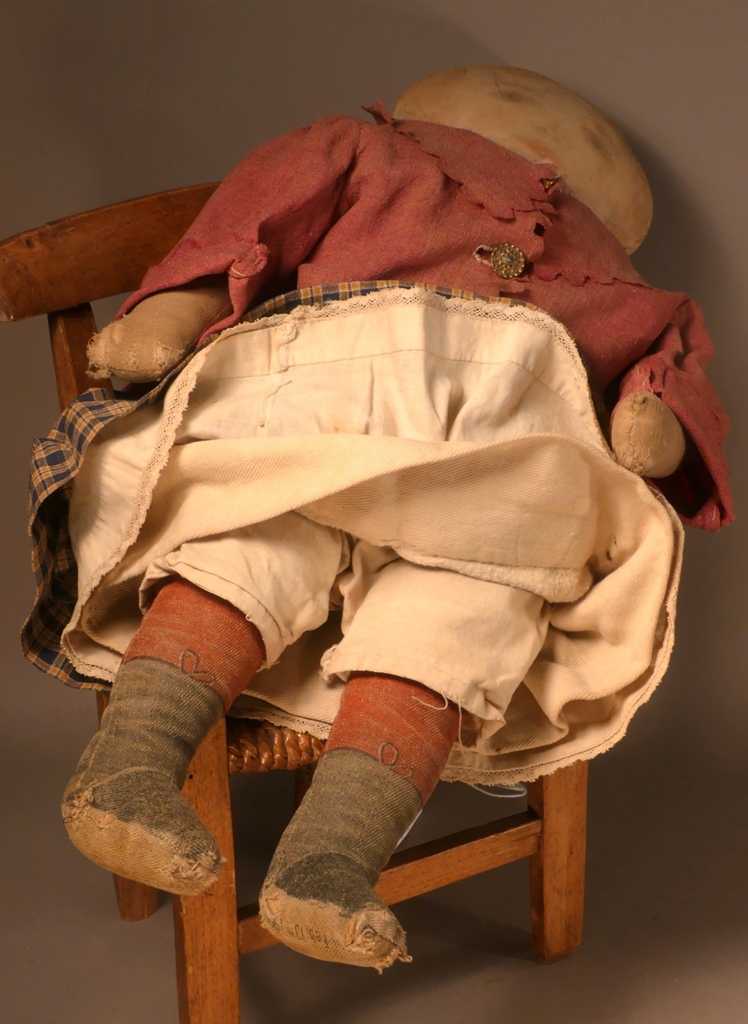
The Philadelphia Baby, also known as the Sheppard Baby, was sold in the infants’ department of the J.B. Sheppard & Co. store in Philadelphia around 1900. It is believed that these dolls were made in the store’s own workshop. This 21″ example features the typical molded stockinette face, with highly detailed molding of the facial features. The eyes are realistically painted, and the chubby face has rosy-tinted cheeks and lips. The doll also has softly painted short hair and finely sculpted ears.
The body is made of stuffed stockinette, with the lower arms and legs also oil-painted. When originally clothed, these dolls typically wore a baby gown and bonnet. This particular example is dressed in a mix of antique garments, including underclothing, a red gauzy dress (which is too small but likely added for color to highlight the lovely embroidered stitching of the antique smock), and a worn red cotton bonnet, left as it was found. The shoes are old replacements over antique stockings.
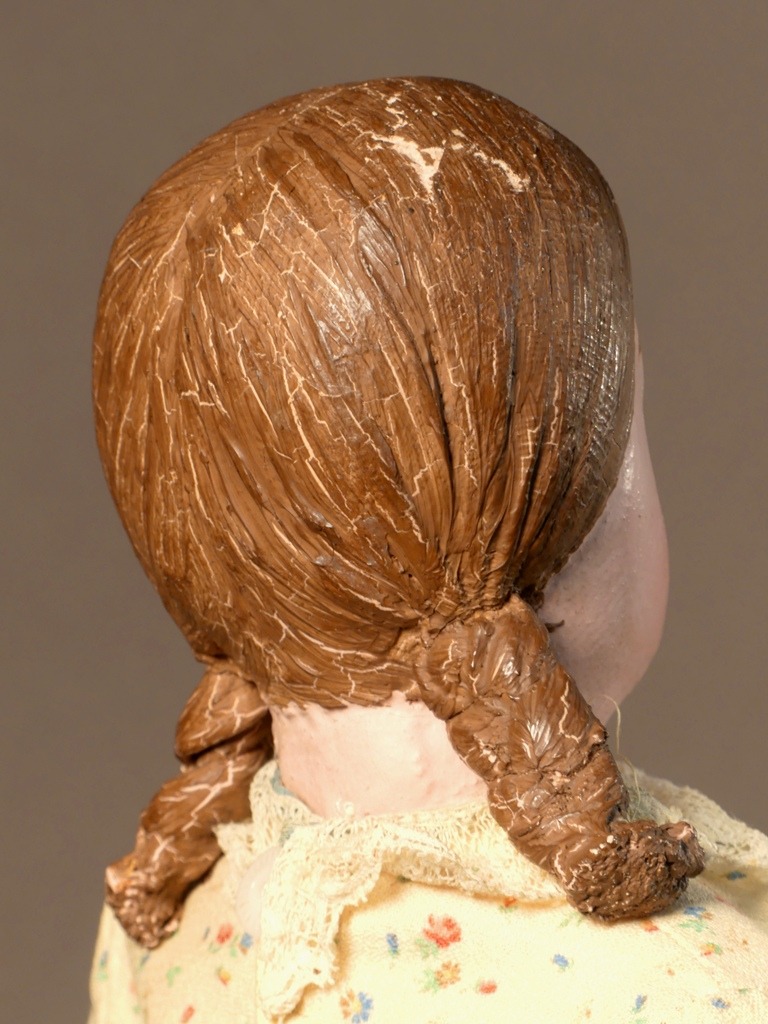
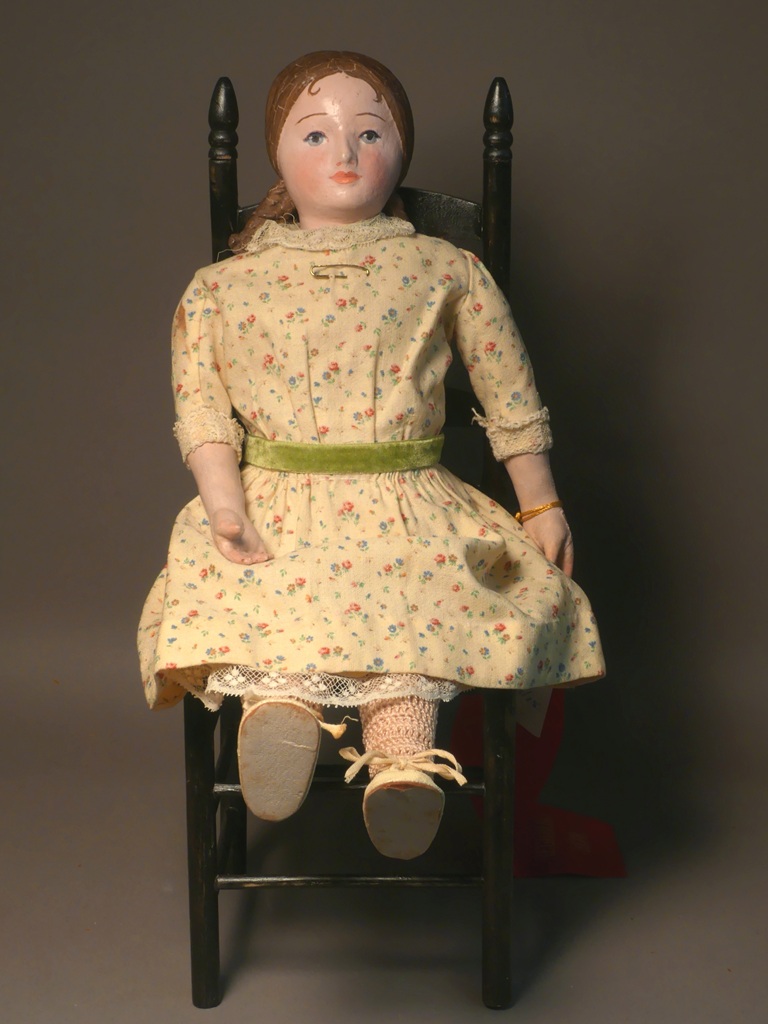
What a healthy looking and happy girl this 18″ cloth Alabama Baby is! She just exudes positivity with her wide open, brown painted eyes, molded features, painted brunette hair, and very well preserved painted face with just a scuff over the tip of the nose. Invented by Ella Guantt Smith of Roanoke, Alabama in 1897, the dolls were known for their “indestructability”, thanks to a plaster-coated cloth head with durable oil-painted features and a flexible, jointed cloth body that can sit or be stood up.
This one-of-a-kind, early black American cloth doll (20″) dates from circa 1880. The doll has a stuffed stockinette head and body, with a friendly face featuring black shoe-button eyes, black yarn hair, and a red-painted mouth with painted white teeth peeking through a subtle smile. Her original red print clothing is antique, and she is accompanied by a small companion cloth doll resting securely on her lap.
Additionally, attached to the doll is a very charming, antique cotton quilt with an abstract motif of a little black child, repeated throughout the design. The doll can stand or sit and is in very good condition.
s s s
An elusive French leather baby from the early 1920s sits in a German Marklin carriage with the original, but very worn, hood. The original cream-painted metal surface of this sturdy, high-quality carriage shows some wear, which is expected. The baby is jointed at the shoulders and hips of her smooth, flesh-tinted, all-leather body, and her pressed leather face has suffered puckering on the head over the years. The painting is intact, as are the textured accents on her molded blonde short hair.
She wears an antique baby gown and crocheted bonnet. Little is known about these extremely rare leather babies, and of the few examples to be found, it appears that fewer than a handful of artists were producing them, judging by the few recognizable face styles.
s s s
Dressed in her original bold red outfit with peachy contrasting borders and red felt shoes, this black felt doll bears great similarities to a Lenci Mascotte, with painted, surprised features and curly, short black mohair locks. She belonged to an avid Lenci collector, many of whose prized Lencis are for sale on the Miscellaneous page.
s s s
From the ever-popular and highly desirable Sports Series, we present a well-suited Lenci polo player with the 300 model face. Dating from 1930, he has light brown, side-glancing eyes on a molded felt pouty face with pronounced cheeks, creating an almost downward expression. His sandy blonde mohair inset locks, molded and applied ears, and slightly olive complexion give him a distinctive appearance, with a head that subtly swivels. His chubby, childlike body is jointed at the shoulders and hips and is very clean, with just minor signs of the nearly 100 years that have passed since his creation. There are only faint smudges around the face, and the costume shows some slight discoloration on the pants or breeches.
His polo outfit scores First Place with a vivid red felt polo jacket, cream felt riding breeches with saddle reinforcements, a cream felt knotted tie stuffed into the lapels of the jacket, a black felt riding hat, and his original wooden polo stick with a braided leather handle. Last but not least are the detailed, black leather knee-high riding boots, complete with authentic metal spurs.
s s s
Dating from the early 1900s, this charming black cloth doll wears a colorful outfit. Her face features are created by strategic stitching that forms a protruding nose, while her eyes, brows, and mouth are embroidered. A small touch of white stitching adds light to each eye, and her red lips are beautifully defined.
Her hair is tightly crimped black yarn, covered with a red and white polka-dot bandana that complements the vibrant colors of her multi-colored cotton dress. Over this, she wears a heavy white cotton apron, with a swatch of dress fabric neatly tucked into the left-side pocket. Her body is made of black cotton cloth, and for added details, she has a jade green cotton underslip, worn black leatherette slippers, and beaded glass pierced earrings.
s s s
Resting in her original, labeled factory box is this spunky Lenci Mascotte girl (9″), dressed in her original “sweeper” outfit and holding her straw broom with a wooden handle. She has light blue, side-glancing painted eyes, long blond hair with a top bun, and a slightly olive complexion.
Her costume consists of an orange-red and crème checkered felt dress with a crème fabric apron, crème socks, and orange-red felt shoes. While the red color has faded somewhat, there are no visible moth holes. The box is in good condition, with some wear at the corners of the lid. Cara Bambina!
s s s
From the Art Doll Movement of 1920s Germany comes the artist Dora Petzold and her thoughtful character children. Using pressed cardboard or composition for the face and head, and various cotton fabrics for the bodies (this one has the Dora Petzold mark on the derriere), these well-dressed dolls catered to the elegant lady and boudoir doll customers of the day.
This slender young lady has a skillfully painted face with two-tone brown eyes, a bit of highlight color on the eyelids for depth, pale brows, a long nose, and salmon pink painted closed lips. Her soft, short hair is made of blond mohair, and her slender, firm cloth body is jointed at the shoulders and hips, with the added movement of a swiveling head.
Mailing Address
P.O. Box 4327
Burbank, CA 91503
Phone
(818) 738-4591
© Copyright 2026 • Mary Ann Spinelli • All rights reserved.