
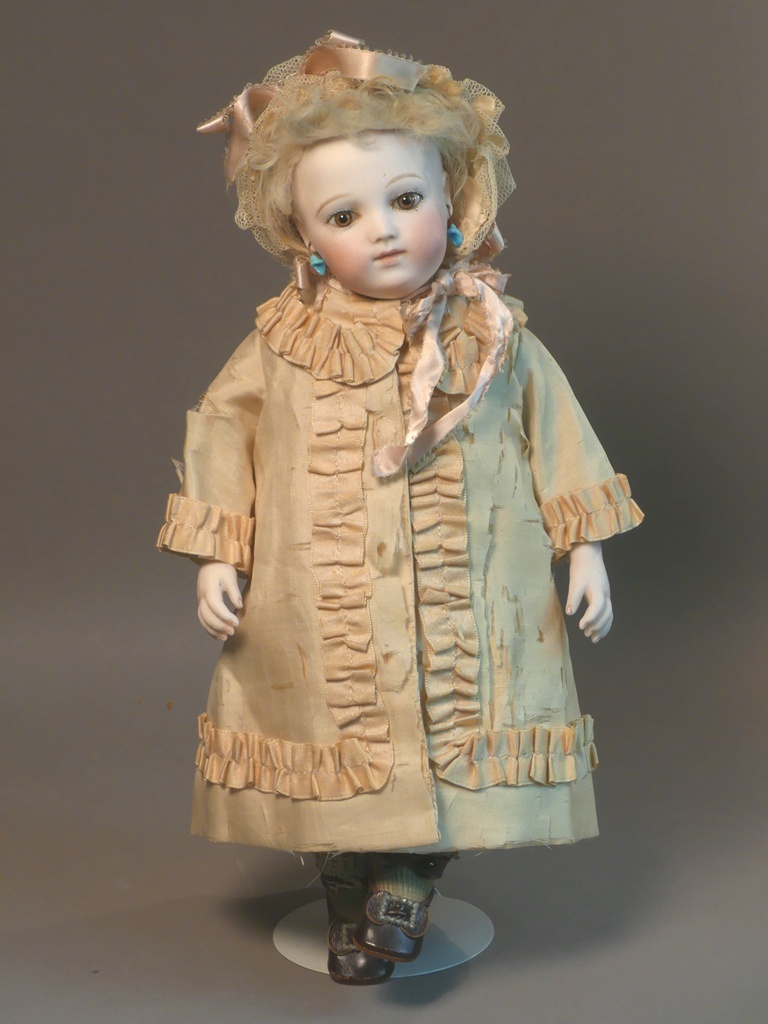
11" Family Bru Brevete
$14,750. / ON LAYAWAY
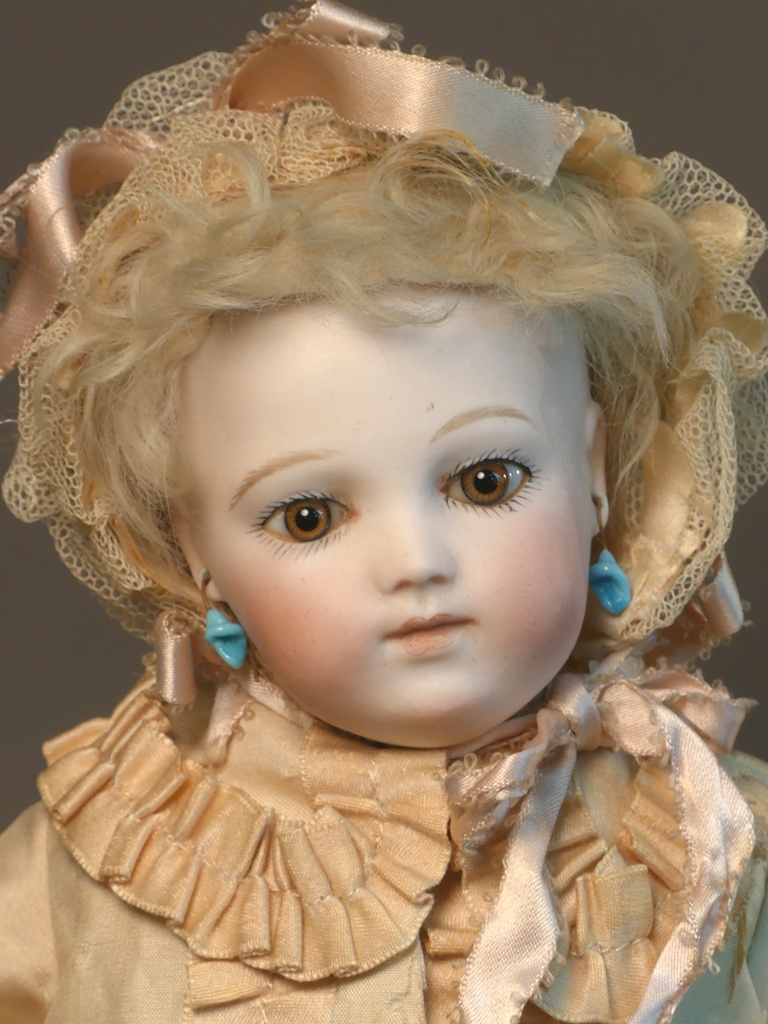
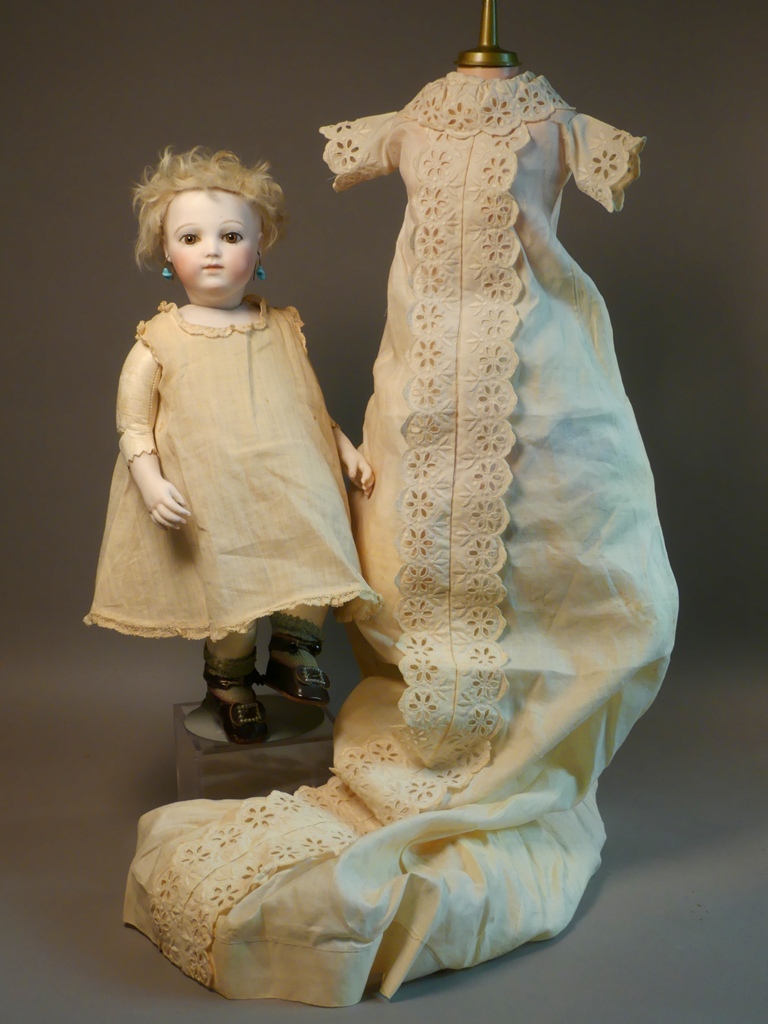
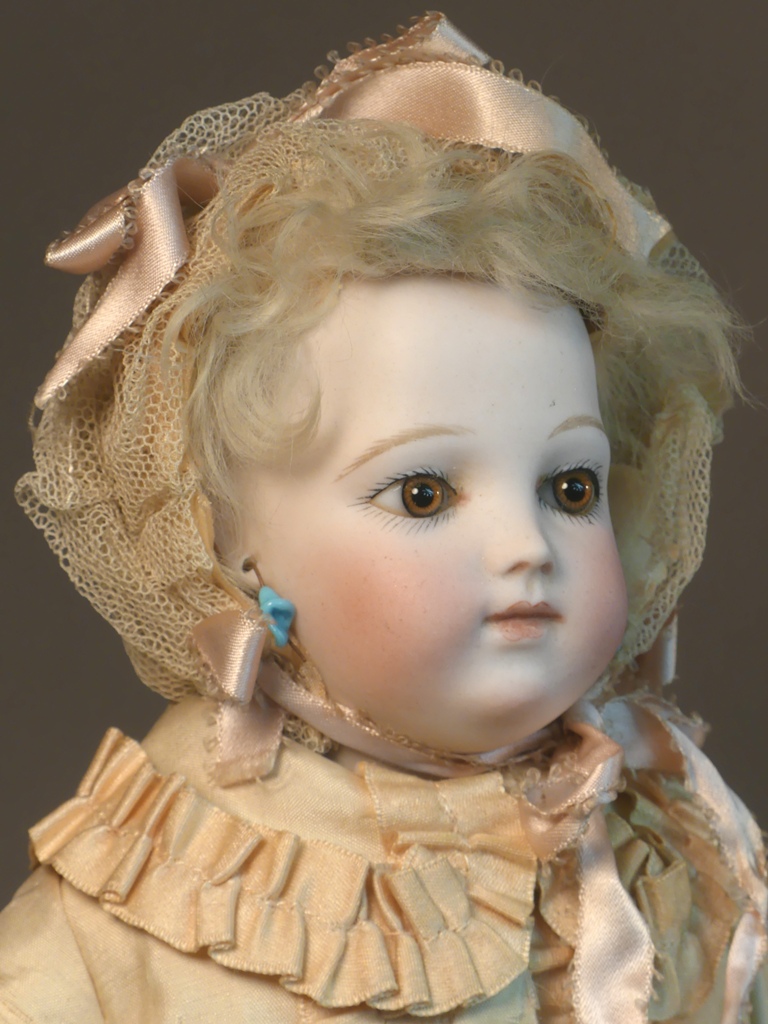
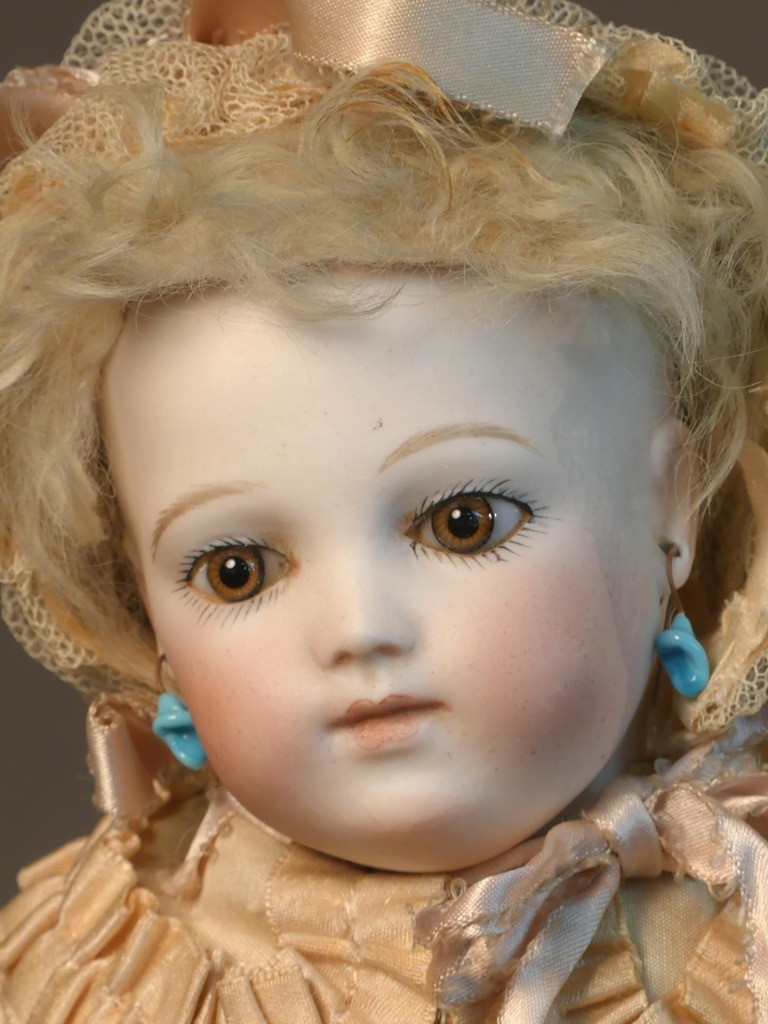
Having lived in the same family since the early 20th century, this dear Bru Brevete bebe has many heartwarming stories to tell. With her owner living on the East Coast of the U.S., much travel was done to Europe early on, and it is probable that this doll was purchased on one of those trips. She arrived in an antique, early cotton Christening gown which is shown in one photo and does come with her, then an antique child’s coat dress of fragile silk was added to her wardrobe.
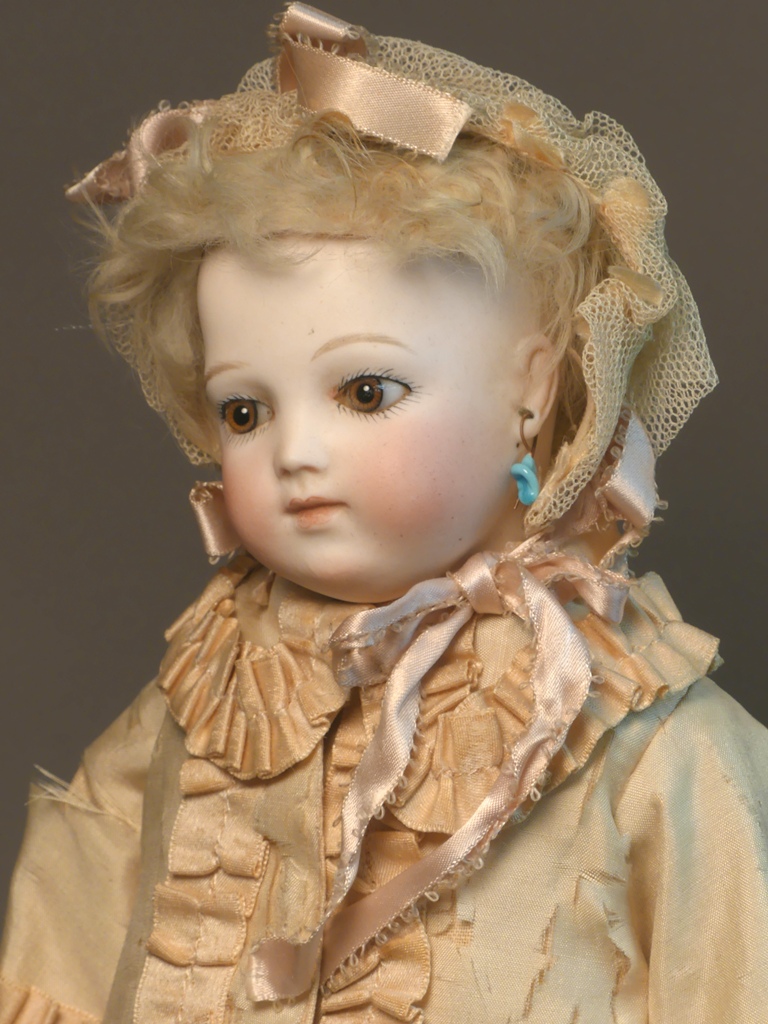
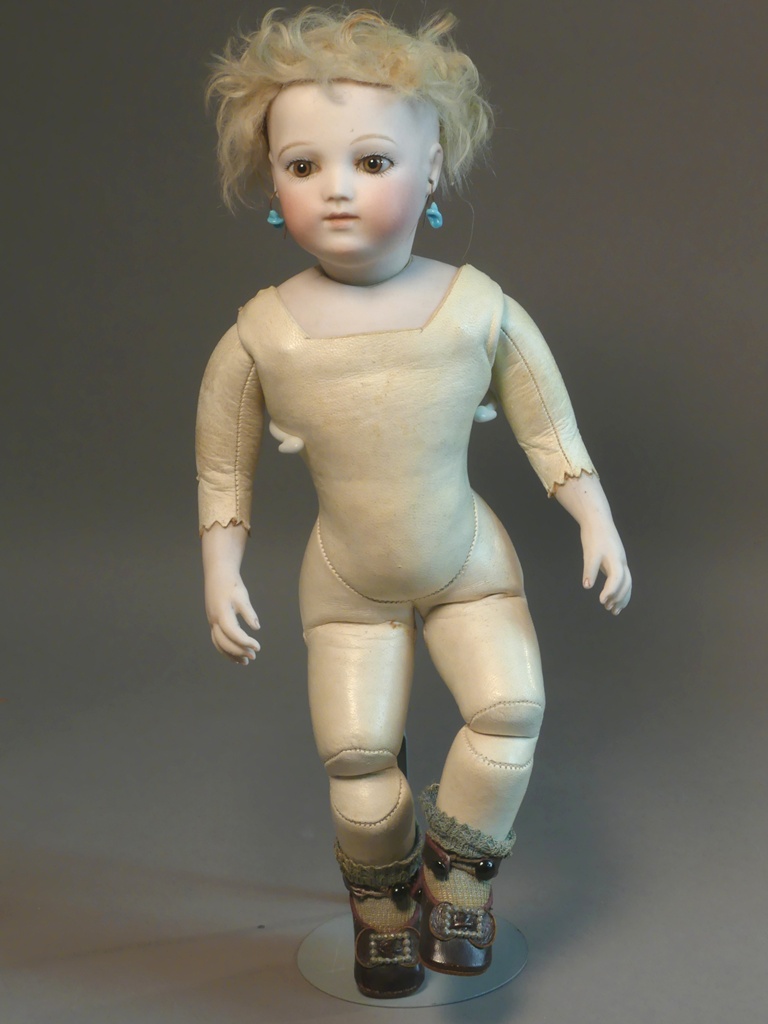
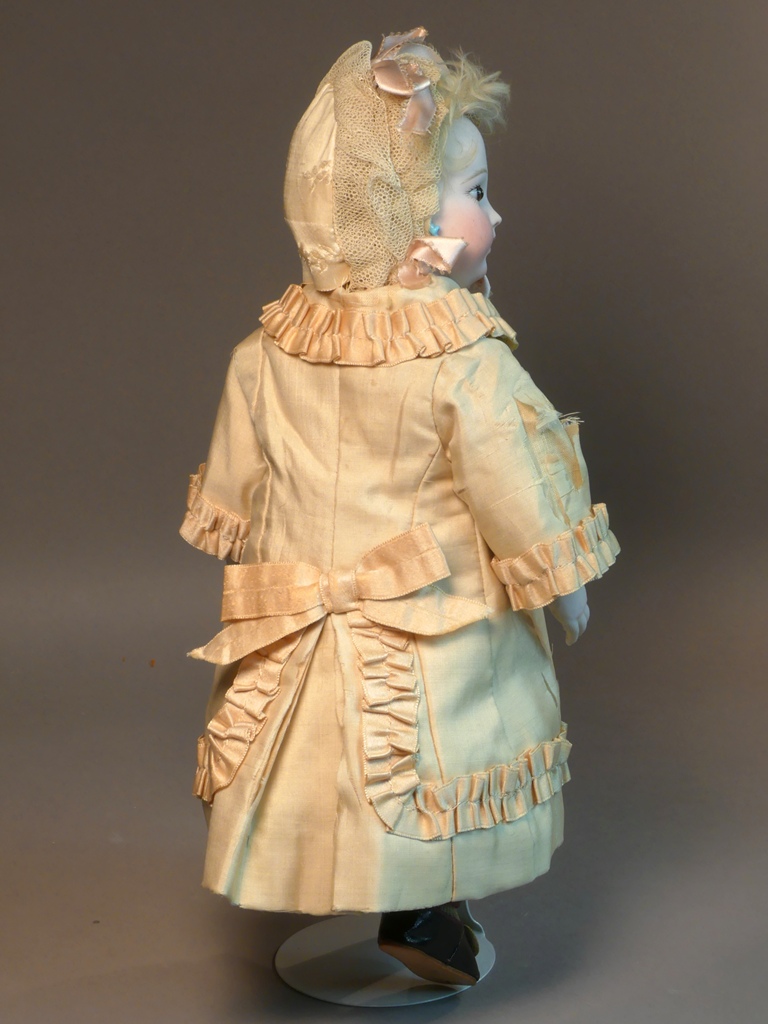
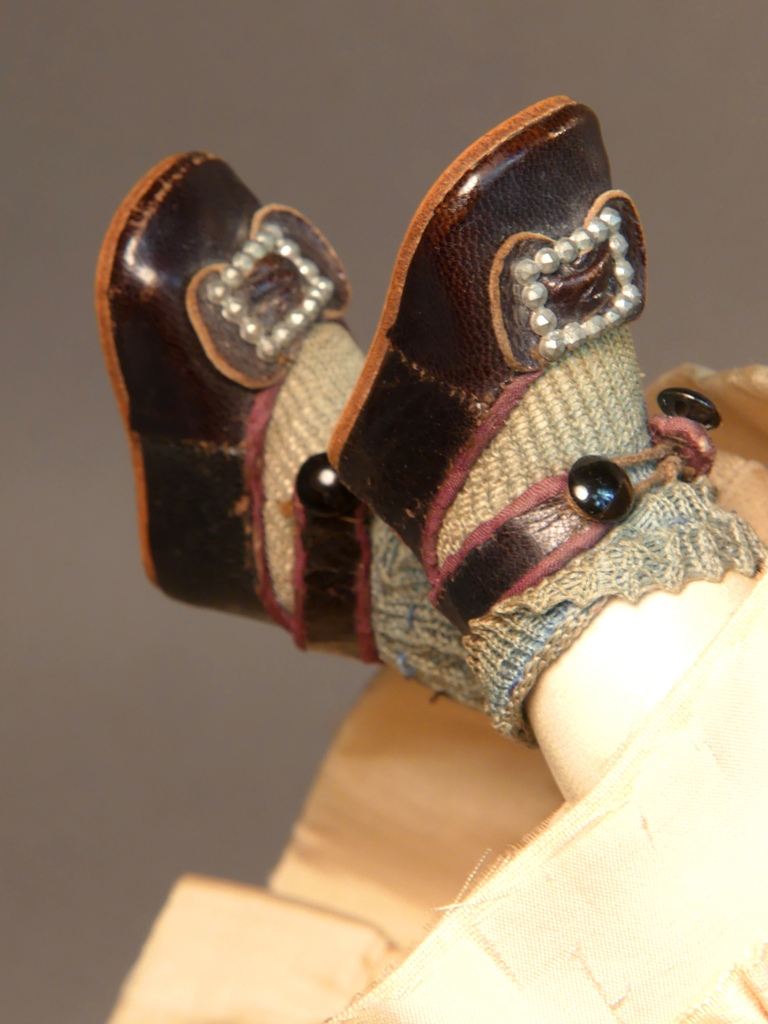
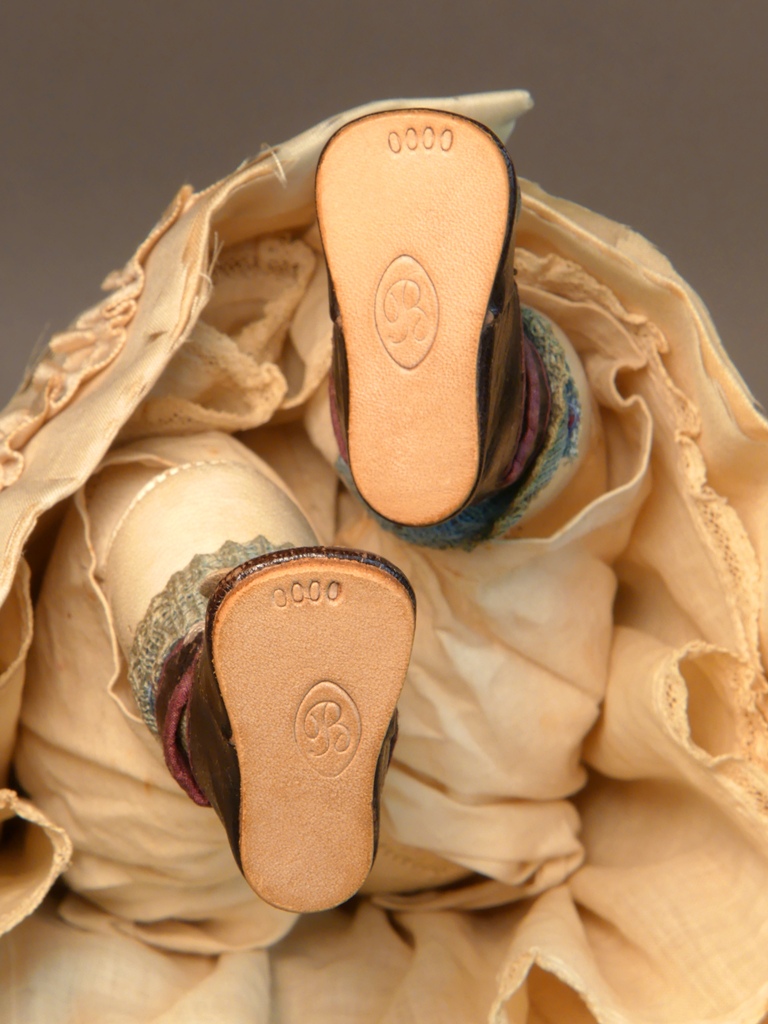
There is quite a bit of melting on the coat dress, but it displays nicely and it is nice how the peachy pink trim of the corresponding antique bonnet is picked up in the dress. Her original blue stockings are indeed Bru and her original shoes are mint, marked Bru shoes that reflect the mark of 4/0 incised on the back of her head with the mark of 0000 on the soles.
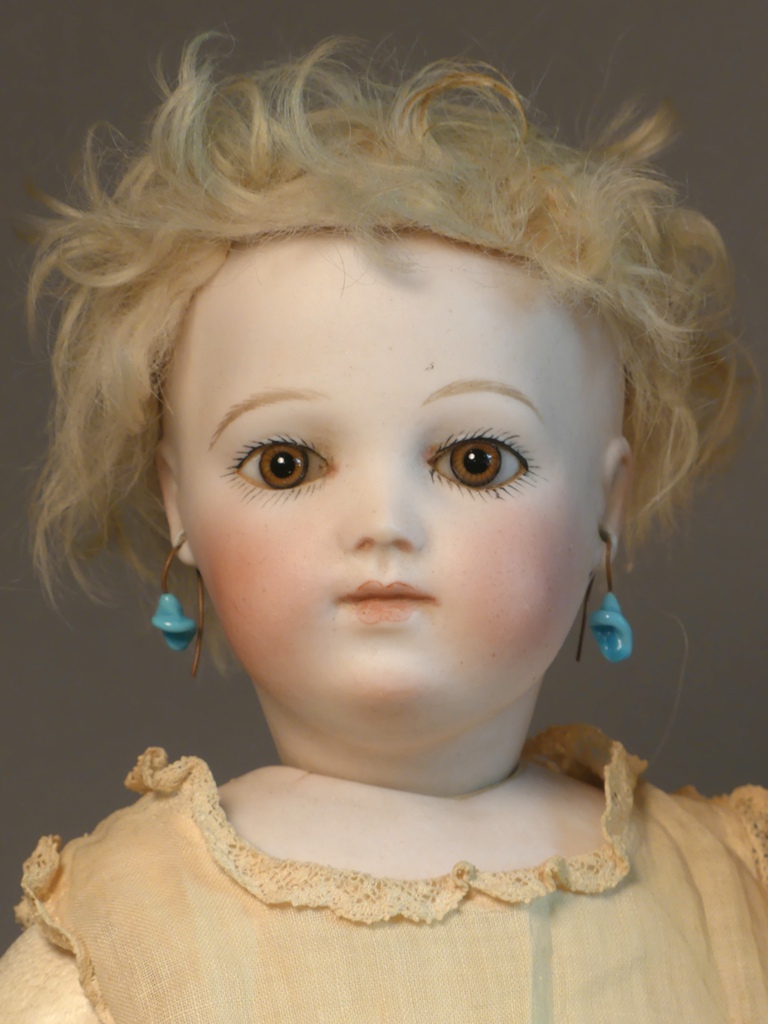
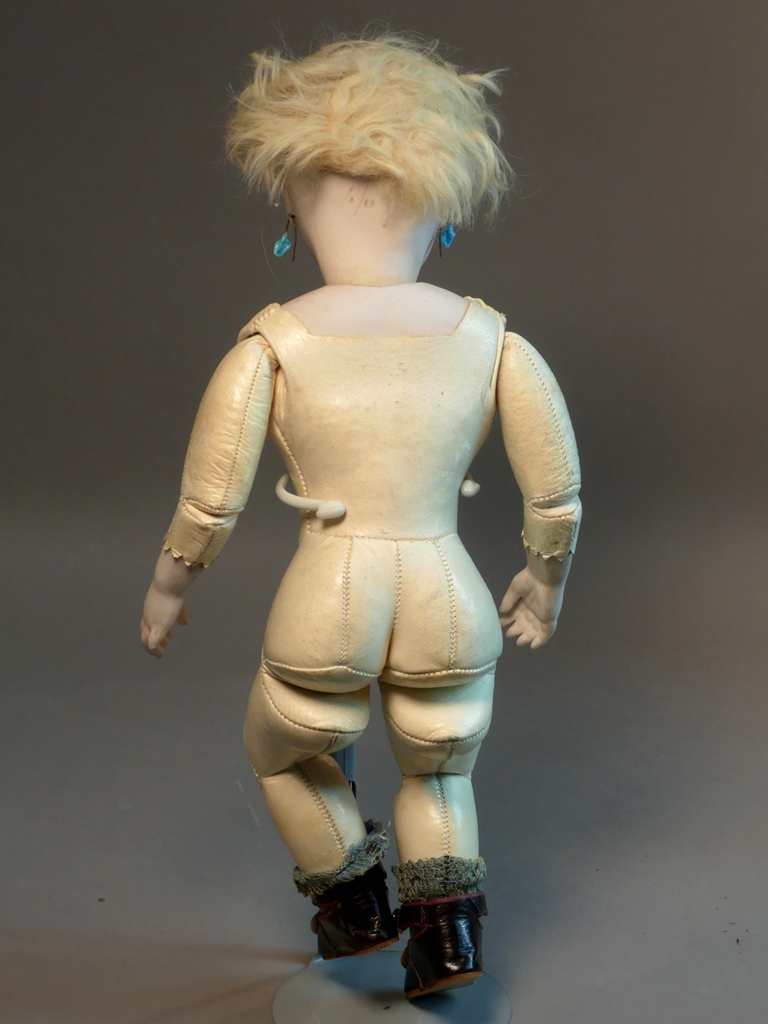
Creamy pale bisque is the palette for her soft decoration of eyebrows and lashes (one lower lash on her left side originally painted slightly thicker), a whisper of blushing on her cheeks, and a closed mouth in a pale rose pink. Her paperweight eyes are a rich brown, she has a swivel neck, and her original wig is a tousled, short lambskin wig. Her clean, gusseted kid body is in excellent, sturdy condition and her lower arms have gently posed, pale bisque hands. (One pinky finger is broken at the knuckle.)
s s s
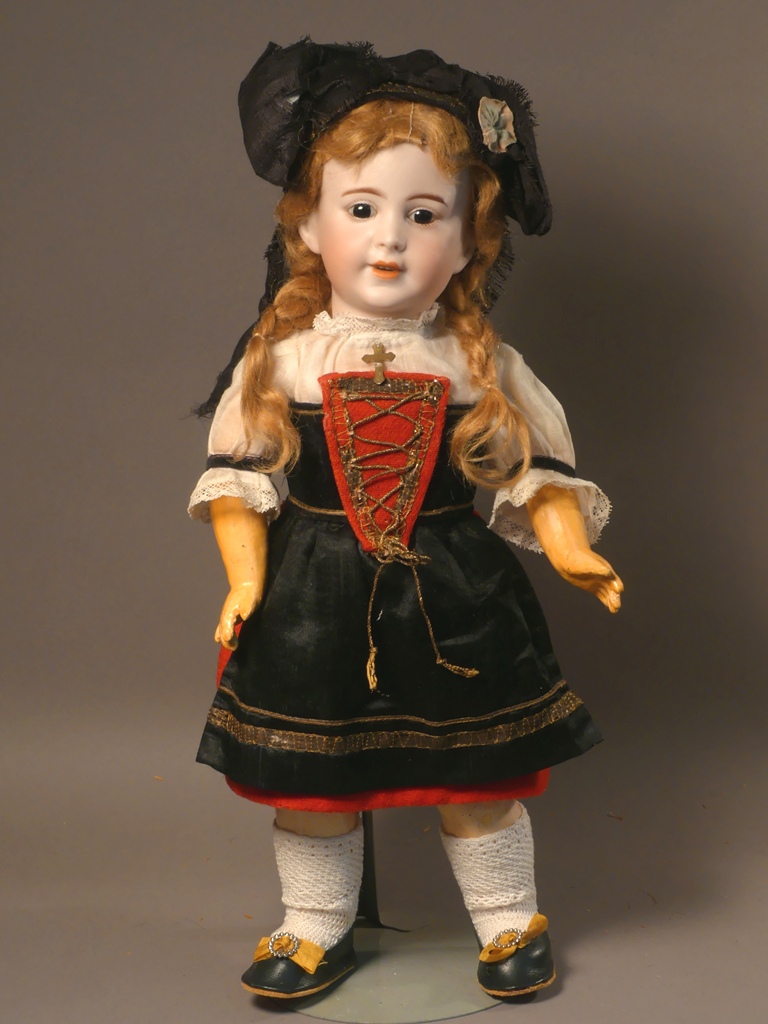
S.F.B.J. Mold 238
14"
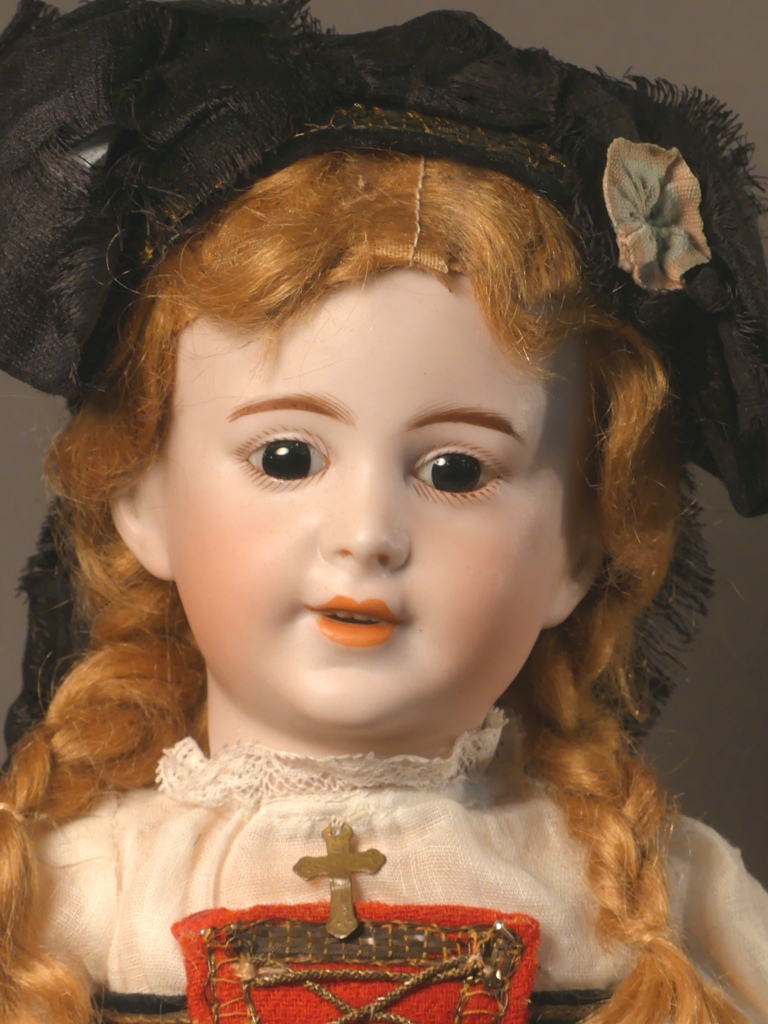
All Original
$2,200.
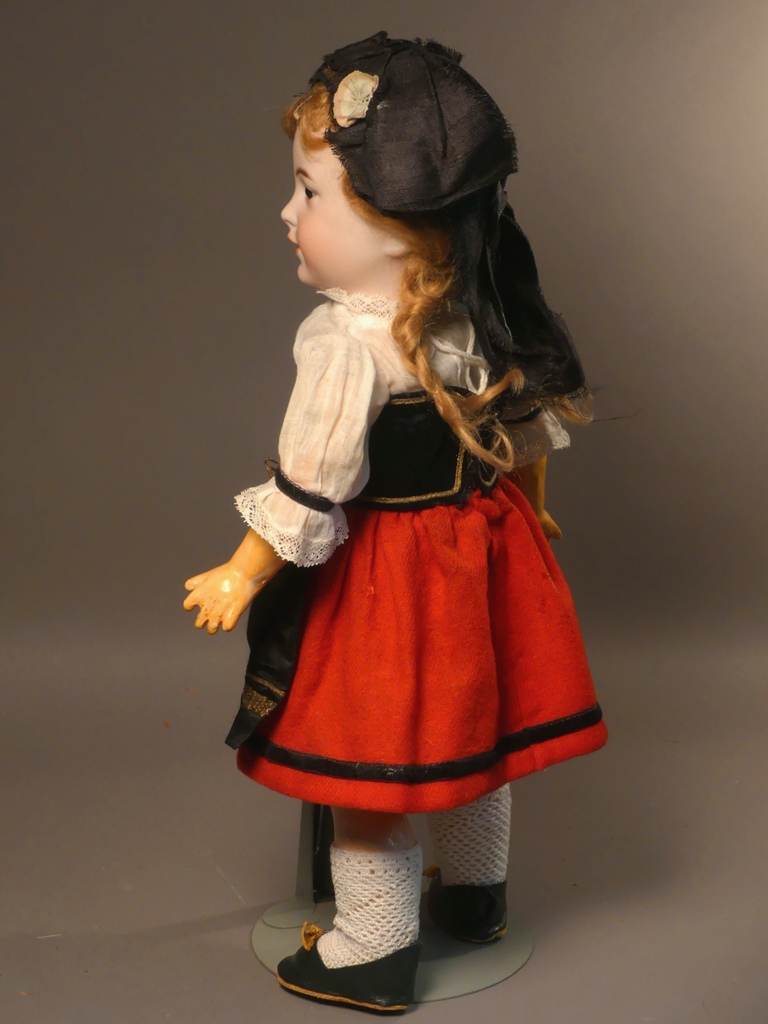
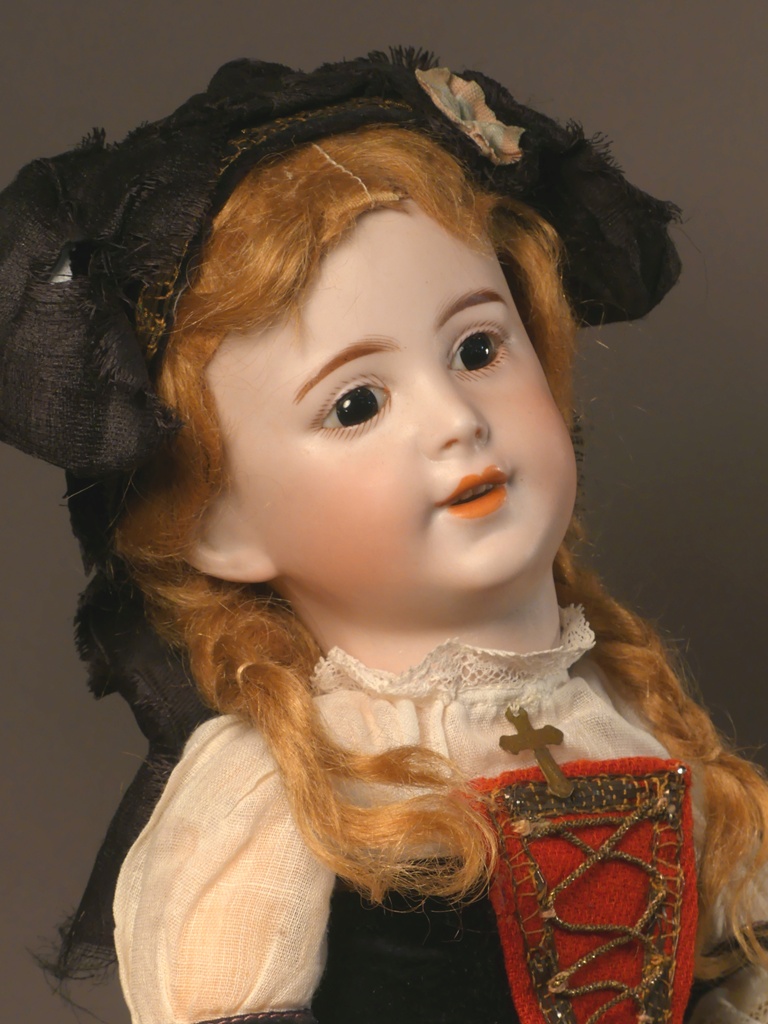
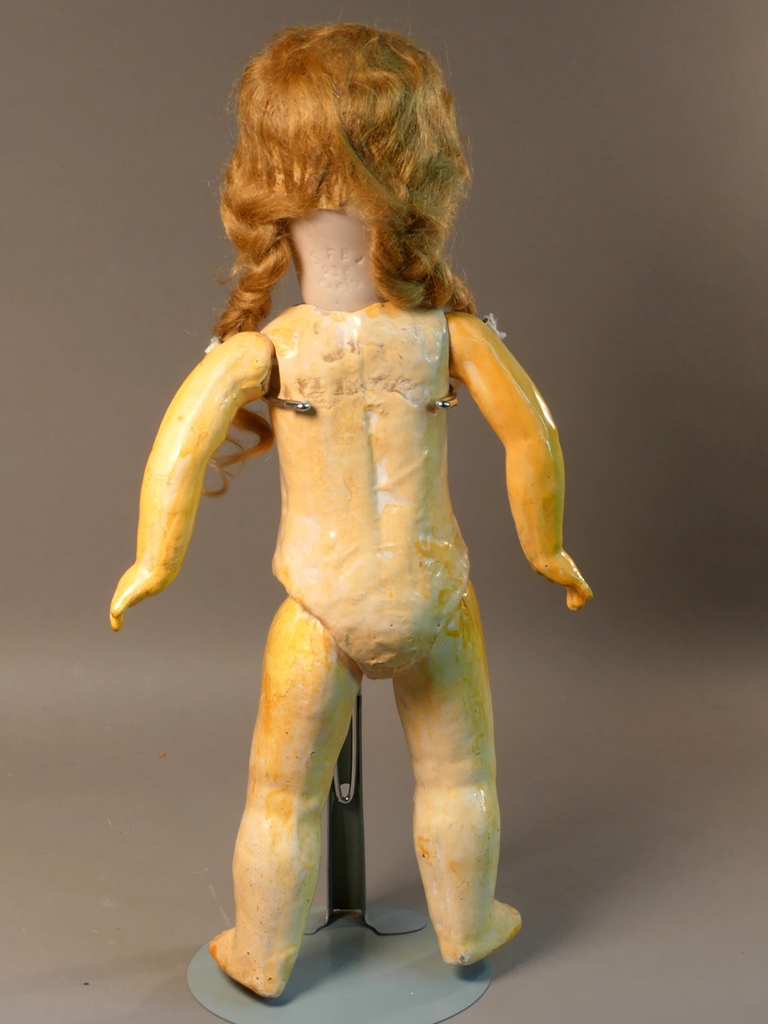
Often the characters in the 200 series of SFBJ are referred to as “jewel eyes”, due to the sparkly nature of the glass eyes they were given. This being a brown-eyed example, it is more of a deep, rich color than if she were blue-eyed. She has creamy, smooth bisque with gentle coloring, an open mouth with molded teeth, her original, wavy auburn wig and she is on a sturdy, SFBJ composition body jointed at the shoulders and hips.
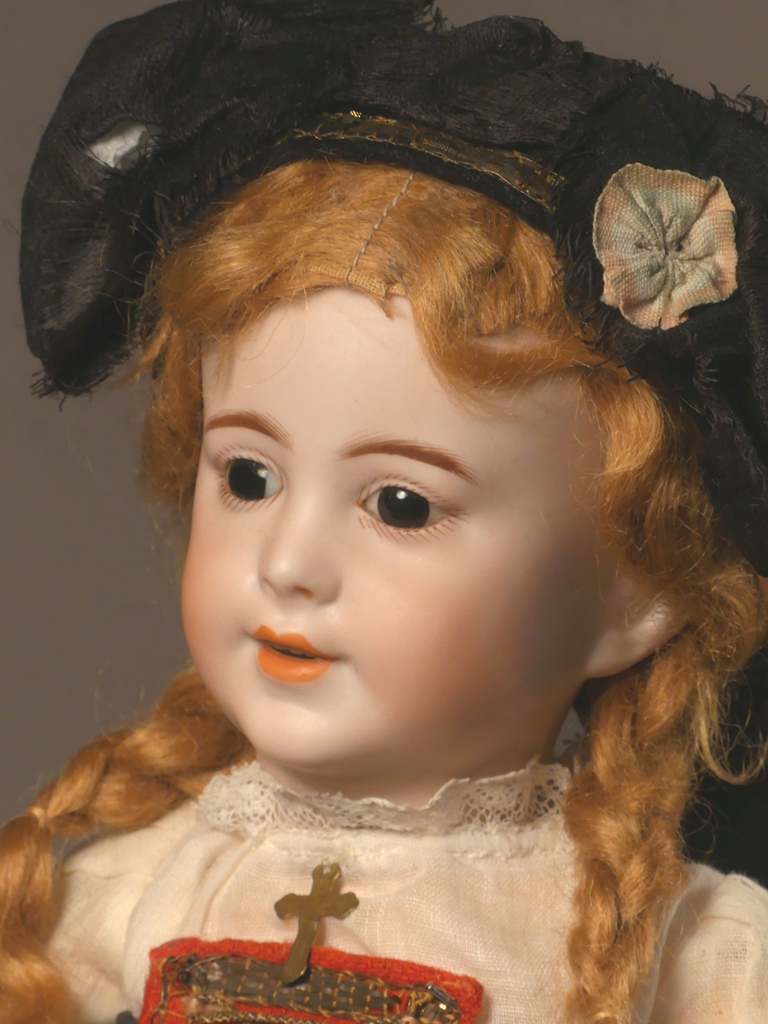
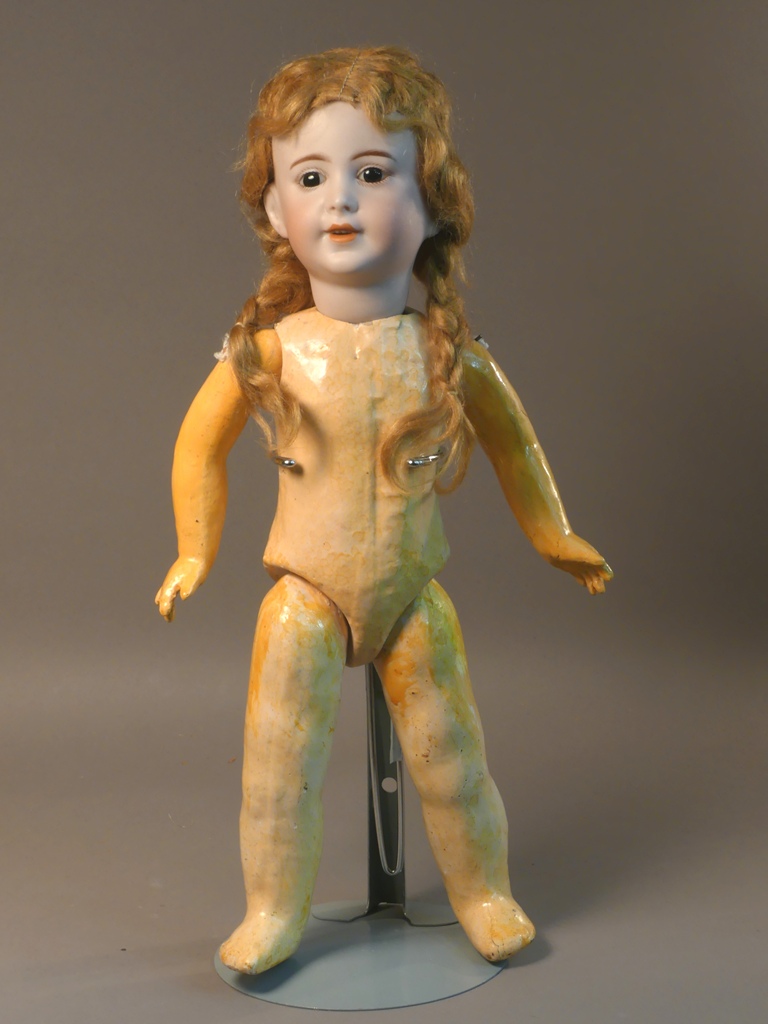
She was probably made as a representation of her original costume of the Alsace region of France, more than being a toy to play with. The red wool skirt and bodice are dramatic against the black silk pinafore and signature, oversized bow (has some melting and is missing a decorative rosette) on her head.
s s s

Bru Jne. R
13 1/2"

Size 5
SOLD


From the Gerard Period comes the Bru Jne. R with her friendly presence, a closed mouth, crystal blue eyes, multi-stroke brows and wispy eyelashes, pierced ears and a replace, strawberry blond mohair wig. Her pale bisque is smooth and subtly shaded.


She has a Bru composition and wood body that is fully jointed, having the distinct structure of the quality bodies from this factory. A full antique dress of contiunous, white ruffled lace is accented with a deep turquoise blue sash and a coordinating, soft silk chapeau of blue and white with an elongated back rim. She is not one to be shy, so she wears her rusty red, French leather antique shoes. Antique undergarments too!

s s s


6" French Shepherd Boy
$795


Contained in an antique paper-covered, cardboard egg, decorated with an illustration of a shepherd boy playing his flute, surrounded by his attentive flock of sheep. The image comes alive as when you open the egg, you have again, a shepherd boy with his flute nearby, surrounded by his flock of sheep and in addition, a green paper tree for extra ambiance. The 6 ” boy is French, probably F.G., with a bisque head, blue glass eyes, closed mouth and five-piece composition body, wearing his original pastoral costume.


His flock of six sheep are nearby, one of them having two weak legs, and all the items in the 7″ long egg can rest in the two, straw and paper grass layered compartments inside. There is wear to the opposing edges where the cardboard egg joins together, causing difficulty in getting it to stay closed. However, it probably won’t be closed too long when display time arrives!

s s s

Steiner Gigoteur
18"

Early Face
$2,250.


What an innovator Jules Steiner was, with his genius often see portrayed with dolls that are not only beautiful, but that also perform a function. The Steiner Gigoteur was one of them, using an early faced bebe, bisque head with teeth, that when the original key is wound, and the lever released, she raises her arms, subtly moves her legs and says “Mama, Papa!”. She has bright blue paperweight eyes, an open mouth with the teeth set way back, super pale with gentle painting of features, and her original blond wig.


Her body is physics in motion, with it’s heavy cardboard body that encases the clockwork type function that makes the composition arms and lower legs move when wound. The joints are underneath a leather covering and don’t forget the working voice box! Her dress has age and was made with antique fabric and trims, her white cream, side button boots are antique.


s s s


Luminous Jumeau Portrait Bebe
$6,850.


The Jumeau portrait Bebe went through a brisk evolution of looks in a very short period of time, being the first half of the 1880s. This fresh-faced girl (16″) is from the second series of about 1883, and you can see the refinement that took place with her very symmetrical and balanced features. She has ocean blue paperweight eyes, a closed mouth in pale rose, and smooth, even pale bisque with gentle shading and decoration. Her mohair wig is a very nice replacement, her ears are pierced, and she has her cork pate, but not the Jumeau “screwgle” type attachment.


The chunky, marked Jumeau eight-ball body is jointed at the shoulders, elbows, hips, and knees, and has straight wrists. It looks like the arms and legs have an old repaint that has developed its own patina. She wears an antique, pale grey-blue silk frock with lace trim, gathered all around the lowered waist. Her undergarments are antique, as is her flower-adorned, woven straw hat.

s s s

Bru Jne 5 on Chevrot Body
16"

Antique Costume of the Orient
$27,500


With the influx of Asian influence in 19th-century Europe, it is no surprise that it would inspire the presentations of vintage dolls, such as this luscious Bru Jne. 5 Bebe. Everything, from furniture and art to music, home décor accents and fabrics, jewelry, and fashion, offered examples featuring Asian themes, prints, patterns, and accents. And that is clearly visible with her antique Chinese silk costume with jumpsuit, embroidered robe, hat, and platform silk shoes, all displaying colorful fabrics, motifs, and trims genuinely Asian.


Even the original antique wig that is part of the costume is made of strong, black human hair that is loosely styled, allowing the long locks to fall from the shoulders. She is also shown with an antique, blond mohair wig that she keeps to the side in case she needs it for a future extra outfit. She has warm brown paperweight eyes, lush lashes, and finely stroked brows on a molded brow bone, creamy bisque with appealingly shaded cheeks, and a closed mouth, in a delicate rose hue with fine outlining of the lips. She has pierced ears with the right earring hole having a chip. As Chevrot bodies go, hers is outstanding in condition and cleanliness of her leather torso, leather over wood upper arms, leather over metal armature upper legs, and wood lower legs and carved feet.


Her lovely bisque hands in their ballerina pose are perfect, and on her chest is her original, Bru Jne factory label, still very intact! The era in which this Bru was made coincided with the introduction of the elusive Asian featured Bru Jne by Casimir Bru, and these brown-eyed examples feature traditional Bru Jne. Features were also offered in the costumes of the Orient.


s s s


Pair of French Children and Sheep in Original Box
$2,650


Still mounted in their original, glass top presentation box is this delightful pair of 7” dolls, a girl and boy, dressed in fancy shepherd costumes of the eighteenth century. The dolls have bisque heads, hands, and lower legs, glass eyes, and closed mouths, with bodies made of firmly stuffed cloth. Their clothing is original, right down to their satin-covered staffs and opulent chapeaux.


On the pasture with them are four papier-mache and wood, fleece-covered toy sheep. Still secured in this original display, they have never been played with; therefore, they are in mint condition!

More French Dolls go to page 2
Mailing Address
119 Muirfield
Williamsburg VA 23188
Phone
(818) 738-4591